
"hand-picked beans"
900 article(s) found

World coffee origin Zimbabwe Zimbabwe
It produces high quality coffee beans. Coffee cultivation in Zimbabwe dates back to modern times, beginning in the 1960s when farmers in southern Africa established coffee plantations. Coffee cultivation in Zimbabwe is concentrated in the eastern highlands adjacent to Mozambique, which are dominated by the Chimanimani Mountains and Nyan to the north.
Coffee producing area Coffee introduction to Zimbabwe
High-quality Arabica coffee beans cater to the needs of foodies. Coffee cultivation in Zimbabwe began relatively recently, in the 1960s, when farmers in southern Africa set up coffee plantations. Coffee cultivation in Zimbabwe is mainly concentrated in the eastern highlands near Mozambique, mainly by Chimanim

Zimbabwe Coffee quality Kenyan AA Coffee is as smooth and fruity as it is.
Zimbabwe's high-quality Arabica coffee beans cater to the needs of foodies. Coffee cultivation in Zimbabwe began relatively recently, in the 1960s, when farmers in southern Africa set up coffee plantations. Coffee cultivation in Zimbabwe is mainly concentrated in the eastern highlands near Mozambique, and the highlands are mainly made up of Chimanimani
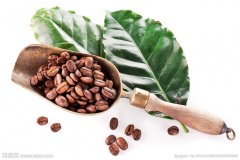
Farfell Manor is the most interesting coffee plantation in Zimbabwe.
High-quality Arabica coffee beans cater to the needs of foodies. Coffee cultivation in Zimbabwe began relatively recently, in the 1960s, when farmers in southern Africa set up coffee plantations. Coffee cultivation in Zimbabwe is mainly concentrated in the eastern highlands near Mozambique, mainly by Chimanima

Zimbabwe Coffee quality Kenyan AA Coffee is soft and smooth with rich fruity aromas
High-quality Arabica coffee beans cater to the needs of foodies. Coffee cultivation in Zimbabwe began relatively recently, in the 1960s, when farmers in southern Africa set up coffee plantations. Coffee cultivation in Zimbabwe is mainly concentrated in the eastern highlands near Mozambique, mainly by Chimanima

Hartmann red wine treatment
Its inspiration comes from the brewing technology of red wine. The selected coffee cherries are placed in a specific container with a device similar to a red wine fermentation suppository or a single exhaust valve. In this way, carbon dioxide can be spilled through the device to control the concentration of air in the container. At this time, the coffee cherries in the container are fermented by acetic acid, which is the opposite.

Geisha Coffee Taste Geisha Coffee Flavor Description
Professional coffee knowledge exchange More coffee bean information Please pay attention to coffee workshop (Weixin Official Accounts cafe_style) The price of geisha coffee may exceed $600 per pound, especially Hacienda la Esmeralda, a family plantation from Poquete, Panama. According to the Specialty Coffee Association of Panama, this is

Guatemala hundred Flowers Manor Solar treatment Kaddura exquisite wine flavor
Professional coffee knowledge exchange more coffee bean information please follow the coffee workshop (Wechat official account cafe_style) Front Street-Guatemala hundred Flower Manor Sun treatment introduction Guatemala hundred Flower Manor Sun area: Jutiapa Hutiapa Province, Jalapa Harapa Province and Santa Rosa Santa Rosa, Guatemalama Guatemala Manor: LAS FLORES Variety: Kadu

Flavor characteristics of coffee beans in Latin America is the price of coffee beans expensive in Latin America
Professional coffee knowledge exchange more coffee bean information please pay attention to the coffee workshop (Wechat official account cafe_style) Latin American coffee bean flavor characteristics: balanced, moderately sour and mellow South American bean flavor: generally speaking, the flavor is relatively regular. Among them, Brazilian coffee is soft and sweet, Costa Rican coffee is mild and supple, sour, sweet and chocolate
Know Arabica Robusta coffee beans
In terms of varieties, coffee trees are mainly divided into two types: one is Arabica, and the other is Robusta Arabica Robusta, which is mainly produced in tropical Central and South America and on the island of Madagascar in west and central Africa. Indonesia in Asia is planted on alpine slopes at an altitude of 9002000 meters above sea level and on alpine slopes at an altitude of 200600 meters above sea level.

Kenya Coffee Kenya rating
Usually, Kenyan coffee is classified as follows: 1) Common categories: coffee fruits picked by hand, picked by hand, picked out immature fruit (unripe), overripe fruit (overripe) and other defects, peeled, after about 36 hours of fermentation, placed on a metal grid for sun drying, in the processing plant to remove the seed shell (parchment) to become a blue-green appearance

Create the perfect natural environment of Costa Rican coffee with attractive aroma
Professional coffee knowledge exchange more coffee bean information Please follow the coffee workshop (Wechat official account cafe_style) Costa Rican Coffee Costa-Rica coffee's excellent quality stems from a variety of elements, including a perfect natural environment, professional manual picking, environmental practices, diversified planting areas and active guidance of government regulations. Make Costa Rican coffee.

Detailed introduction of traditional washed coffee beans in Kenya _ Katubaya Cooperative AB TOP
Professional baristas exchange please follow the coffee workshop (Wechat official account cafe_style) Kenya _ Katubaya Cooperative AB TOP Kenya Gatomboya AB TOP delightful exquisite sweet smell of berries! Kenya is close to Ethiopia, and since the 1950s, it has been modified with SL28 and SL34 bourbon (Bourbon) with extremely varied and unparalleled lemon aromas.
Kenya grades Kenyan boutique coffee beans
Kenya Cupping (Simon) 2015-08-01 16:00 usually Kenya coffee is classified as follows: 1) Common classification: coffee fruits picked by hand, picked by hand, picked out immature fruit (unripe), overripe fruit (overripe) and other defects, peeled, fermented for about 36 hours, placed on a metal grid for sun drying
Coffee planting method
The coffee wrapped in the flesh will be planted to the seedbed, 40-60 days will germinate, about 6 months after germination will grow to about 50 cm seedlings. At this stage, the seedlings are still fragile and must be covered with something such as winter gauze to block direct sunlight.

Honey-treated Nicaraguan coffee flavor Taste Manor Introduction to producing areas Joy Manor Nicaragua coffee
Madriz Alpine Bean is an ecological coffee with a very hard shell. It is grown in a pure natural environment and uses complex operations to maintain the delicate aroma and taste of coffee. It is grown in Matagalpa and Jinotega in northern Nicaragua. The average annual rainfall is 1500-1700mm and the temperature is between 20-29 degrees Celsius. Coffee is hand-picked.
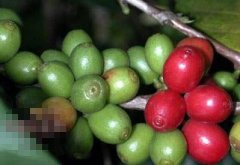
Coffee picking
Good quality coffee is handpicked one by one to maintain the perfect coffee taste.

Kenyan grade coffee bean boutique coffee
Usually, Kenyan coffee is classified as follows: 1) Common categories: coffee fruits picked by hand, picked by hand, picked out immature fruit (unripe), overripe fruit (overripe) and other defects, peeled, after about 36 hours of fermentation, placed on a metal grid for sun drying, in the processing plant to remove the seed shell (parchment) to become a blue-green appearance

Description of Arabica Coffee Flavor in Africa and Zimbabwe A brief introduction to the origin of African bean Arabica coffee
High-quality Arabica coffee beans cater to the needs of foodies. Coffee cultivation in Zimbabwe began relatively recently, in the 1960s, when farmers in southern Africa set up coffee plantations. Coffee cultivation in Zimbabwe is mainly concentrated in the eastern highlands near Mozambique, mainly by Chimanim

Basic knowledge of Coffee beans cultivation conditions of Coffee trees
There is a noun called Coffee Belt. There are more than 60 coffee producing countries in the world, most of which are located in the tropics and subtropics between the Tropic of Cancer (latitude 2326). This coffee growing area is called a coffee belt or coffee area (Coffee Zone). The annual average temperature of the coffee belt is above 20 ℃, because the coffee tree is a tropical plant, and if the temperature is below 20 ℃,